Random Adjective Generator
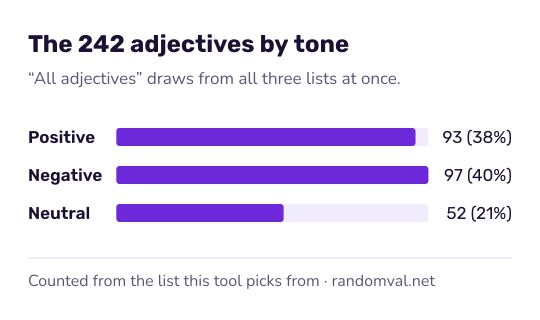
The random adjective generator draws 1, 5 or 10 adjectives from three lists: 93 positive, 97 negative and 52 neutral, descriptive ones. Choose how many and which tone, then press the button.
Updated
How the random adjective generator picks adjectives
The page holds three lists: 93 positive adjectives (such as brave, calm, cheerful), 97 negative ones and 52 neutral, descriptive ones. Adjectives give more information about the people, animals or things that nouns name.
Choose one list or “All adjectives”, and 1, 5 or 10 words are drawn. On “All adjectives” each entry has a 1 in 242 chance on a single draw, and a neutral word comes up about one time in five. Within one list, a word drawn is taken out for the rest of the set.
Which list a word belongs to is the page's own judgement; plenty of adjectives change tone with context. Each pick is an unbiased draw from the browser's cryptographic random generator, as described in how our randomness works.
Example: putting random adjectives in order
Draw 5 from “All adjectives” and try to put three of them in front of one noun. English has a usual order: an opinion word such as charming comes before age, and age before color, as in “a charming, old-fashioned blue boat”.
When two drawn words fight, as cheerful and grumpy might, the sentence has to explain why. For the noun, use the random noun generator.
Ways to use random adjectives
- Describe it: draw five adjectives and write one sentence that uses each.
- Opposites: draw a word and name its opposite.
- Character sketch: draw three and decide what kind of person they describe. Pair the result with a name from the name generator.
For adjectives mixed with nouns and verbs, use the random word generator.
Questions about the random adjective generator
How many adjectives are on the lists?
242 entries: 93 positive, 97 negative and 52 neutral. Nineteen words, such as strange, tired and thoughtful, are on two lists, so there are 223 different adjectives in all.
Can the same adjective come up twice in one set?
Not within one list: each word drawn is taken out for the rest of the set. On “All adjectives” one of the 19 words that sit on two lists can, rarely, appear twice in a set of 5 or 10.
Who decides whether a word is positive or negative?
The page does, and the lists are a rough guide. Many adjectives change tone with context: proud can be praise or criticism. Use the lists as a starting point and argue about the borderline cases.
Sources
- Cambridge Dictionary: Adjectives — what adjectives do (checked October 16, 2026)
- Cambridge Dictionary: Adjectives: order — the usual order of several adjectives before a noun (checked October 16, 2026)